Attic Fan Installation & Repair Services

Support healthy attic airflow and help manage excess heat and trapped humidity with electric attic fan installation, replacement, and repair services.

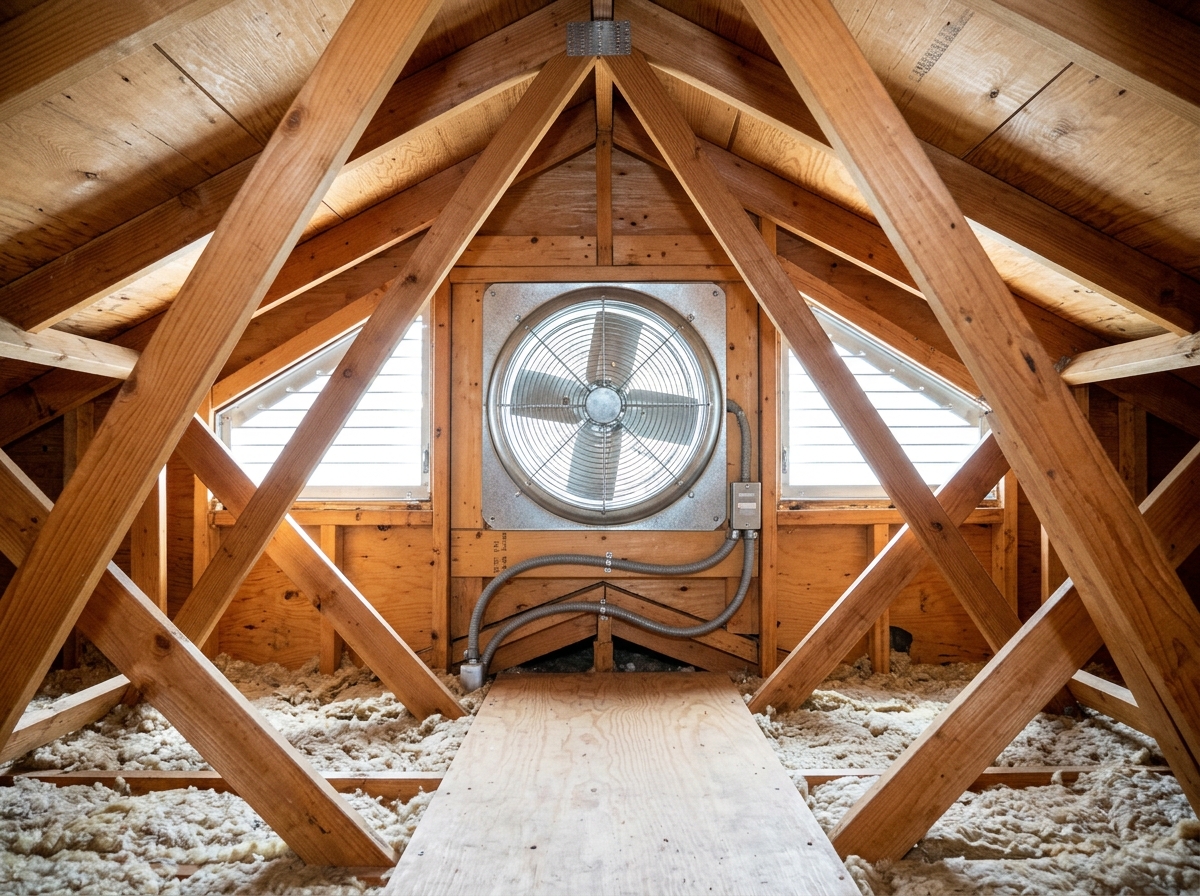
Galvanized steel attic ventilation fan mounted between wooden attic roof framing

Attic Ventilation Installation & Repair Scope

Properly functioning attic fans help exhaust hot air and moisture buildup from upper roof cavities.

Attic Fan Installation Services

Installation and replacement options tailored to gable vents, roof-mounted exhaust hoods, and existing attic framing.

  • Gable-mounted and roof-mounted power attic fan installation
  • Thermostat and humidistat control setup for automated operation
  • Replacement of older or underperforming attic exhaust units
  • Inspection of intake and exhaust airflow pathways in attic spaces

Attic Fan Inspection & Repair

Troubleshooting for attic fans that stop running, run continuously, or create excessive vibration and noise.

  • Thermostat and electrical switch testing
  • Motor assembly, fan blade, and housing vibration checks
  • Obstructed louver, screen, and airflow diagnostics
  • Wiring connection and mounting bracket repairs

Common Symptoms & Repair vs. Replacement Guide

Recognize early signs of attic fan trouble and evaluate when a targeted repair or full fan upgrade makes sense.

Attic Fan Troubleshooting Reference
Observed Symptom Common Cause Typical Next Step
Fan will not turn on in peak attic heat Faulty thermostat, tripped circuit breaker, open thermal fuse, or disconnected wiring Test incoming voltage, thermostat continuity, and motor capacitor
Fan runs continuously day and night Thermostat set too low, stuck relay contacts, or high attic humidity setting Inspect and recalibrate or replace the thermostat/humidistat control
Loud humming, rattling, or ceiling vibration Worn motor sleeve bearings, unbalanced blade, or loose roof/gable mount Inspect shaft play, tighten framing mounts, or replace motor assembly
Attic still feels stale or damp despite fan running Blocked soffit intake vents, stuck gable louver shutters, or undersized CFM Clear exterior louvers/screens and verify intake-to-exhaust vent balance

When Repair Usually Fits

Repairs work well when the roof flashing and fan housing remain weather-tight and structurally sound.

  • Thermostat or humidistat switch stops cycling at target temperatures
  • Gable louver shutters bind from dust, paint, or debris
  • Mounting brackets have loosened on rafters or gable framing
  • Motor assembly can be swapped cleanly inside an intact roof dome

When Replacement Makes More Sense

Full unit replacement is often better for aging fans with worn housings or recurring electrical faults.

  • Rusted roof flashing, hail-damaged shroud, or weathered dome housing
  • Motor seizes or trips the breaker repeatedly from internal winding failure
  • Existing unit is undersized for the attic footprint or excessively noisy
  • Upgrading to dual thermostat/humidistat control or brushless motors

Attic Fan Sizing, CFM & Selection Guide

Sizing an attic fan depends on attic square footage, roof pitch, and matching adequate soffit intake air.

Estimated Attic Fan Capacity by Attic Footprint
Attic Floor Area Recommended Airflow Typical Setup
Up to 1,000 sq. ft. 800 to 1,000 CFM Single gable or compact roof-mount
1,000 to 1,600 sq. ft. 1,050 to 1,300 CFM Standard roof dome or gable fan
1,600 to 2,200 sq. ft. 1,400 to 1,650 CFM High-capacity roof or gable unit
Over 2,200 sq. ft. 1,800+ CFM (or 2 units) Dual gable/roof units for wide coverage

What Details to Have Ready Before Calling

Having a few attic and roof details handy helps our team quickly review your installation or repair options.

Call Now: (866) 512-0604
  1. Approximate Attic Size & Roof Type

    Share rough square footage, roof material (shingle, tile, or metal), and whether you have gable walls.

  2. Gable vs. Roof Mounting Preference

    Note whether an existing fan sits on the roof slope, inside a gable vent, or if this is a brand-new setup.

  3. Attic Access & Power Availability

    Let us know where the attic hatch or pull-down stairs are located and whether a junction box is nearby.

  4. Current Fan Symptoms (If Repairing)

    Describe noises, nonstop operation, breaker trips, or how long the existing unit has been unresponsive.

Attic Fan Frequently Asked Questions

Common questions about powered attic ventilation, sizing, controls, and repairs.

Need Attic Fan Installation or Repair?

Call The Fan Installers to discuss your attic ventilation installation or repair needs.

Call Now: (866) 512-0604