Whole House Fan Installation Services

Move stale indoor air out through your attic and draw fresh outdoor air through open windows with whole-house ventilation fan installation services.

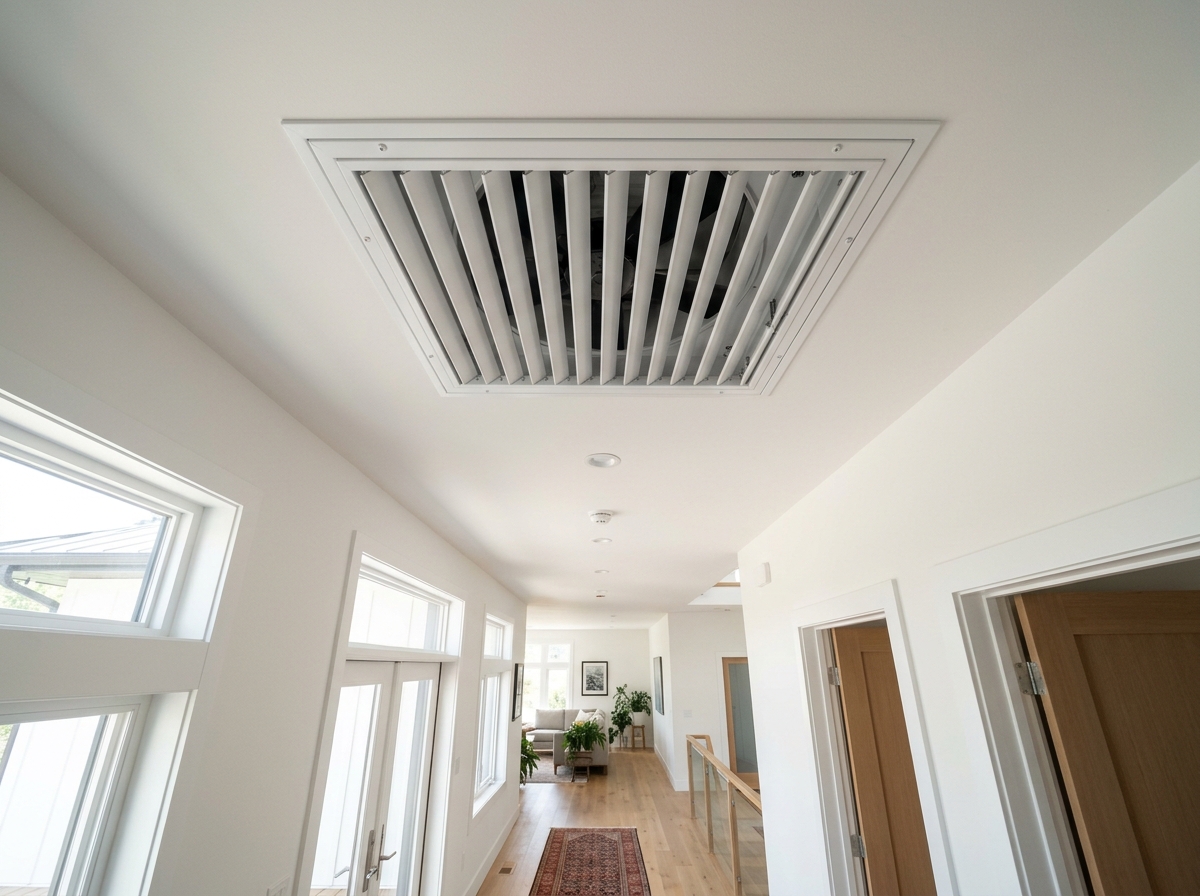
Flush-mounted white louvered whole-house ventilation fan installed in a bright residential hallway ceiling

Whole-House Ventilation Installation

Support natural air exchange throughout your home with insulated, quiet whole-house fan systems.

Whole House Fan Setup & Replacement

Installation support for direct-mount hallway units and ducted, insulated whole-house fan systems.

  • Central hallway ceiling cutout, framing, and louver grille mounting
  • Insulated acoustic ducted whole-house fan installations
  • Wall timer, multi-speed switch, and remote control configuration
  • Replacement of older loud louvered fans with modern quiet units

Attic Venting & Airflow Considerations

Whole-house fans rely on adequate attic exhaust capacity so indoor air moves out smoothly.

  • Evaluation of net free attic exhaust vent area before installation
  • Hallway placement for balanced air draw across bedrooms and living rooms
  • Insulated damper door checks to minimize winter heat transfer
  • Guidance on pairing with attic ventilation systems when needed

Performance Signs & Upgrade Readiness Guide

Understand when installing a whole-house fan—or replacing an older noisy hallway unit—can meaningfully improve home airflow.

Whole House Fan & Upgrade Assessment Reference
Home Comfort Sign Typical Cause Practical Solution
Outdoor evening air is cool, but upstairs rooms stay warm Trapped daytime indoor and attic heat with little cross-breeze circulation Use a hallway whole-house fan with open windows to flush warm air out
Older hallway louver fan shakes or sounds too loud Rigid ceiling-mounted belt-drive frame transmitting vibration into drywall Upgrade to an insulated, suspended acoustic ducted whole-house system
Winter cold drafts drop from an old hallway shutter grille Uninsulated metal louver shutters letting attic air leak downward Replace with a gasketed, insulated damper box (or add a winter cover)
Home feels stuffy after cooking or during mild spring/fall weather Lack of high-volume fresh outdoor air exchange Run whole-house ventilation on low/medium speed for rapid air refresh

When Whole-House Installation Fits Best

Whole-house fans work especially well in climates with cool evenings and accessible attic space above a central hallway.

  • Evening outdoor temperatures drop cooler than indoor room temperatures
  • Attic has sufficient gable, ridge, or soffit vent area to exhaust pushed air
  • Central hallway ceiling provides access to draw air from bedrooms and living rooms
  • Homeowners want to refresh indoor air quickly without running A/C nonstop

When Upgrading an Existing Fan Makes Sense

Swapping out decades-old direct-mount fans unlocks dramatic reductions in noise and winter air leaks.

  • Replacing loud belt-drive ceiling louver units with quiet insulated ducted models
  • Adding multi-speed wall timers or wireless controls for easier evening runtimes
  • Improving hallway airtightness with R-rated insulated damper doors
  • Correcting undersized CFM or pairing dual smaller fans in split-layout homes

Whole House Fan Sizing, CFM & Venting Guide

Typical whole-house fan sizing targets 2 to 3 CFM per square foot of living space paired with matching attic exhaust area.

Whole House Fan CFM & Attic Exhaust Area Reference
Conditioned Living Area Target Fan Airflow Min. Net Free Attic Vent Area
Up to 1,500 sq. ft. 2,500 to 3,500 CFM 3.5 to 4.5 sq. ft. NFA
1,500 to 2,200 sq. ft. 3,500 to 4,800 CFM 5.0 to 6.5 sq. ft. NFA
2,200 to 3,000 sq. ft. 4,800 to 6,500 CFM 6.5 to 8.5 sq. ft. NFA
Over 3,000 sq. ft. 6,500+ CFM (or 2 zoned fans) 9.0+ sq. ft. NFA

What Details to Have Ready Before Calling

Sharing your home's square footage and attic layout helps us discuss whole-house fan capacity and venting readiness.

Call Now: (866) 512-0604
  1. Conditioned Home Square Footage

    Share total living area square footage and whether the home is one-story, two-story, or split-level.

  2. Hallway Ceiling & Attic Clearance

    Note whether there is an open attic above your central upstairs hallway and whether joists run standard widths.

  3. Current Attic Vent Setup

    Check what exhaust vents exist on the roof or gables (gable louvers, box vents, ridge vents, or soffit vents).

  4. New Installation vs. Replacement

    Let us know if you are replacing an older louvered whole-house fan or planning a first-time installation.

Whole House Fan FAQs

Answers to common homeowner questions about placement, attic venting, winter seals, and quiet operation.

Need Whole House Fan Installation?

Call The Fan Installers to discuss whole-house ventilation options for your home.

Call Now: (866) 512-0604